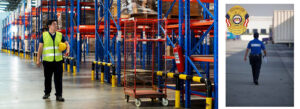
Warehouse & Manufacturing Security in Washington state : Industrial facilities in Washington, state face unique security challenges. Operating in the nation’s capital means navigating high-density logistics, urban congestion, and heightened regulatory scrutiny.
Effective Warehouse & Manufacturing Security here requires a tailored, intelligence-driven approach that goes beyond standard camera systems.
The Urban Industrial Threat Landscape
Warehouse & Manufacturing Security in Washington state: industrial corridors—from Ivy City to the Port of Alexandria corridor—are vulnerable to theft, supply chain interruption, and internal pilferage.
With increased demand for just-in-time delivery, a single breach can halt operations and impact regional distribution. Additionally, the area’s symbolic status attracts activism, making facilities potential targets for protest or unauthorized entry.
Core Security Pillars for state Facilities
1. Layered Perimeter Deterrence
Warehouse & Manufacturing Security in Washington state : Facilities must secure loading docks, employee entrances, and adjacent public rights-of-way. High-definition surveillance with ANPR (Automatic License Plate Recognition) at gate entries, combined with ballistic-rated bollards in high-risk zones, creates a formidable first line of defense.
2. Internal Asset Control & Theft Prevention
Manufacturing environments require compartmentalized access. Biometric scanners for high-value inventory rooms, RFID tracking for tools, and AI-driven video analytics to detect loitering near restricted zones reduce internal and external loss.
3. Crisis Response & Business Continuity
status as a federal hub means industrial sites must coordinate with local MPD and private security partners. Pre-established emergency action plans for active threats, civil unrest, or hazardous material incidents ensure rapid, compliant response.
based operators, security is not a static product but a dynamic partnership. A proactive, localized strategy ensures production targets are met and assets remain uncompromised.
The threat matrix for Washington state-based industrial facilities includes:
Warehouse & Manufacturing Security in Washington state
· Organized Cargo Theft: With major interstate corridors like I-95 and I-495 funneling goods through the region warehouses are prime targets for theft rings targeting high-value consumer goods, electronics, and pharmaceuticals.
· Internal Attrition and Pilferage: High employee turnover rates in urban logistics centers increase the risk of internal theft, particularly in high-volume pick-pack operations.
· Civil Unrest and Activism: As the seat of federal power, experiences frequent protests and demonstrations. Industrial facilities—particularly those tied to government contracts, defense manufacturing, or controversial supply chains—have been subject to unauthorized entry attempts, vandalism, and blockade actions.
· Regulatory and Compliance Pressure: unique municipal codes, coupled with federal oversight, impose strict requirements on security protocols, particularly for facilities handling hazardous materials or sensitive government cargo.
· Homeless Encampments and Trespassing: Warehouses on the edges of developing neighborhoods often contend with persistent trespassing, unauthorized habitation in unused structures, and associated fire safety risks.
The Five Pillars of an Industrial Security Strategy for state
Pillar 1: Layered Perimeter Deterrence and Access Control
Warehouse & Manufacturing Security in Washington state
The perimeter of a industrial facility is its first and most critical line of defense. Unlike suburban campuses with expansive setbacks, urban warehouses often sit directly on the property line. This demands a multi-layered approach:
· Vehicle Access Control: Entry points must be equipped with heavy-duty sliding gates or hydraulic bollards capable of stopping unauthorized vehicles. Automatic License Plate Recognition (ANPR) cameras integrated with access logs ensure that only pre-vetted carriers and employee vehicles gain entry.
· Pedestrian Turnstiles and Mantraps: Employee entrances should utilize anti-tailgating turnstiles with biometric or multi-factor authentication. Mantraps at high-security zones prevent simultaneous unauthorized entry.
· Fortified Loading Docks: Dock doors are among the most vulnerable points. These require high-speed, impact-resistant roll-up doors with tamper alarms and remote monitoring capabilities.
· Exterior Lighting Architecture: Continuous, shadow-free LED illumination across the entire perimeter, compliant with dark-sky ordinances, eliminates concealment points for intruders.
Pillar 2: Intelligent Interior Surveillance and Theft Prevention
Inside the facility, the focus shifts from keeping threats out to containing and identifying risks within. Manufacturing and warehousing environments are dynamic, with constant movement of personnel, equipment, and inventory.
· AI-Driven Video Analytics: Fixed and pan-tilt-zoom (PTZ) cameras equipped with behavioral recognition software detect anomalies—loitering in restricted aisles, removal of high-value items after hours, or personnel entering hazardous zones without proper PPE.
· Inventory-Level Tracking: For high-theft items, RFID gateways at packaging and shipping stations create an electronic article surveillance (EAS) layer that triggers alerts if tagged merchandise exits without authorization.
· Compartmentalized Access Control: Not every employee needs access to every zone. Biometric readers on server rooms, tool cribs, and hazardous material lockers ensure that only trained, vetted personnel enter sensitive areas.
· Cycle Counting Integration: Security systems that integrate with warehouse management software (WMS) can flag discrepancies between physical inventory and digital records in real time, pinpointing potential shrink events immediately.
Pillar 3: Supply Chain and Yard Security
Warehouse & Manufacturing Security in Washington state
distribution centers, the yard is an extension of the warehouse. Trailers waiting to dock, parked chassis, and staging areas are highly vulnerable to intrusion and theft.
· Trailer Security Locks: Kingpin locks, glad-hand locks, and air cuff locks secure unattached trailers, preventing them from being hooked up and stolen by unauthorized tractors.
· Yard Management Systems: Radar and thermal cameras monitor yard activity around the clock, detecting motion in trailer yards and alerting supervisors to unauthorized movement of rolling stock.
· Seal Verification Protocols: Simple but effective: documented procedures for verifying high-security bolt seals on inbound and outbound trailers, with exceptions reported immediately to security leadership.
Pillar 4: Crisis Response, Continuity, and Coordination with state Authorities
In Washington, private security does not operate in a vacuum. Effective incident response requires pre-established relationships with local law enforcement and emergency services.
· MPD Collaboration: Facilities should conduct regular liaison meetings with the Metropolitan Police Department’s district commanders, sharing threat intelligence and coordinating response protocols for scenarios ranging from active shooters to civil disturbance.
· Emergency Action Plans (EAP): Comprehensive, site-specific plans that are drilled quarterly—not just filed away. These plans must address shelter-in-place, total evacuation, medical emergencies, and hazardous material spills.
· Redundant Communication Systems: When primary networks go down—whether from cyber-attack or physical disruption—facilities need backup. Two-way radios, satellite messengers, and analog paging systems ensure command and control remain intact.
· Business Continuity Integration: Security protocols must align with broader continuity plans. If a security incident closes the facility for 48 hours, how does production shift? Which orders take priority? Who notifies affected customers? These questions must be answered in advance.
Pillar 5: Human Capital—The Security Force and Employee Culture
Warehouse & Manufacturing Security in Washington state
Technology alone does not constitute security. The personnel operating the systems and the culture of the workforce are equally determinative.
· Professional Security Officer Standards: security officers should be licensed through the Mayor’s Office of Gun Violence Prevention and possess certifications in first aid, de-escalation, and crisis intervention. Officers are not simply guards; they are ambassadors of the facility’s safety posture.
· Continuous Employee Security Education: Annual orientation is insufficient. Monthly micro-training sessions—five-minute safety talks at shift starts—reinforce vigilance. Topics include phishing awareness, tailgating prevention, and proper reporting of suspicious activity.
· Anonymous Reporting Channels: Many employees witness unsafe conditions or colleague misconduct but fear retaliation. A third-party, anonymous tip line encourages reporting without exposure.
Compliance, Liability, and the DC Regulatory Framework
Operating a warehouse or manufacturing facility in Washington state entails navigating a distinct regulatory landscape. Security directors must be conversant with:
· Official Code § 47–2831: Licensing requirements for private security guards and agencies.
· OSHA General Duty Clause: Obligations to maintain a workplace free from recognized hazards, including security threats.
· Fire Code: Stringent requirements for storage of flammable materials, egress pathways, and emergency lighting.
· Federal Contractor Security Directives: Facilities handling classified or sensitive government material must comply with NISPOM or applicable agency-specific security manuals.
Non-compliance is not merely a paperwork issue. It exposes the company to civil liability, regulatory fines, and in the case of government contractors, potential debarment from future contracting opportunities.
The ROI of Industrial Security in an Urban Context
Warehouse & Manufacturing Security in Washington state
For facility managers and corporate stakeholders, security expenditures are often viewed through a cost-centric lens. This perspective is incomplete. A properly executed Warehouse & Manufacturing Security program in Washington, delivers tangible return on investment:
· Shrinkage Reduction: Direct preservation of margin. A 1% reduction in inventory loss can translate to hundreds of thousands of dollars in annual recovery.
· Insurance Premium Mitigation: Carriers offer favorable rates for facilities with third-party-certified security programs.
· Workers’ Compensation Control: A secure facility is a safer facility. Fewer workplace violence incidents, fewer slip-and-falls in well-lit environments, lower claims.
· Customer Retention: Major retail and commercial clients increasingly audit supplier security postures. A robust program is a competitive differentiator.
· Brand Protection: In an era of social media virality, a single security failure—a stolen shipment, a breached perimeter, a labor disturbance escalating into property damage—can inflict lasting reputational harm.
Conclusion: Security as an Operational Enabler
For industrial facilities operating in Washington, security is not a constraint on productivity; it is an enabler of it. When perimeter controls are seamless, access is frictionless for authorized personnel, and inventory is accounted for in real time, the operation runs faster, cleaner, and more profitably.
The objective is not to build a fortress. It is to build a facility where the legitimate work of manufacturing and distribution proceeds without interruption, where employees feel safe reporting for their shifts, and where customers have confidence that their goods are protected from factory floor to final mile.
In the capital corridor, where commerce and security intersect daily, the standard cannot be “good enough.” It must be mission-ready.